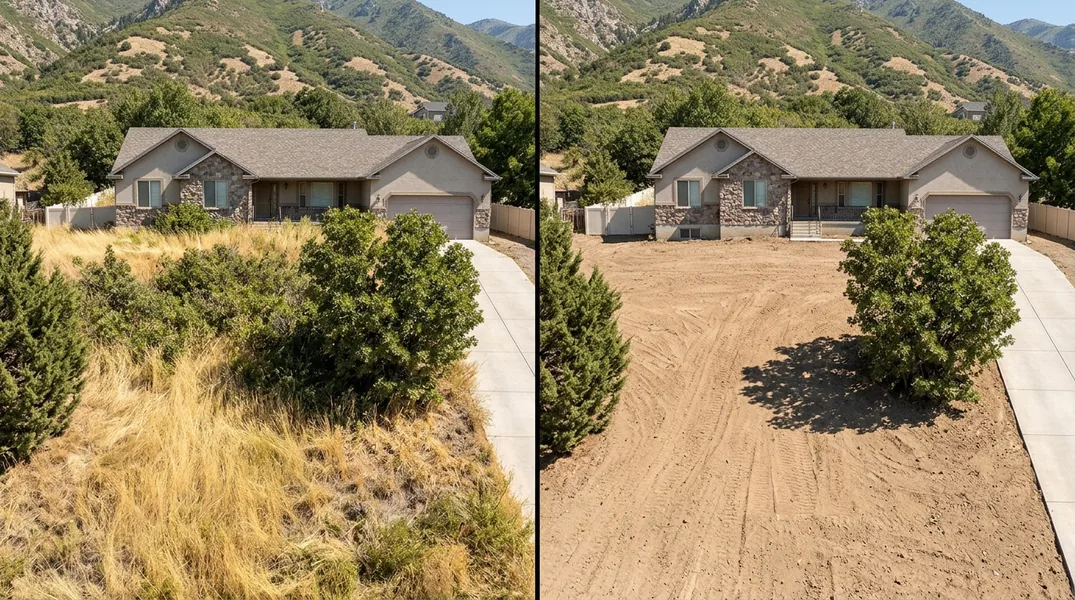
Why Defensible Space Matters on the Utah County Benches
If you own a home on the benches above Provo, you already know the view is spectacular. What you may not fully appreciate is the fire risk that comes with that elevated terrain and dense vegetation. The Utah County benches, which rise along the eastern foothills, are lined with Gambel oak, scrub oak, and other native brush that can transform a manageable landscape into a tinderbox during dry seasons.
Defensible space clearing is not just a recommendation from fire officials; it's a practical investment in your family's safety and your property's survival. A well-maintained defensible space creates zones of reduced fuel around your home, slowing or stopping the spread of wildfire embers and flames. This concept has saved countless homes across Utah and the West, and it's especially critical for residents in Provo and surrounding foothill communities where vegetation density is high and summer conditions are dry.
Understanding the Three Zones of Defensible Space
Defensible space is organized into three distinct zones, each with specific clearing and maintenance goals. The immediate zone extends 5 feet from your home's exterior. In this zone, you should remove all dead plants, fallen branches, and leaves. Tree branches should be pruned back at least 10 feet from chimneys and roof lines. This innermost zone is your last line of defense, and it should be as clear and clean as possible.
The intermediate zone extends from 5 to 30 feet from your home's perimeter. This is where most of the work happens for foothill homeowners. Here, you'll focus on thinning trees and removing smaller vegetation to reduce fuel density. Spacing between tree crowns should be at least 10 feet apart, and lower branches should be removed so that the canopy sits well above the ground. For homes surrounded by Gambel oak, this zone is where selective Tree Removal becomes essential. The outer zone extends 30 to 100 feet from your home and involves lighter thinning, removal of dead trees, and clearing of brush piles.
Gambel Oak Removal: The Utah County Challenge
Gambel oak is beautiful in fall and provides excellent shade, but it's also one of the most fire-prone species on the Utah County benches. This deciduous oak species grows densely, creates significant leaf litter, and holds dead branches that accumulate in the canopy. When fire season arrives, Gambel oak becomes a highway for flames, and its tendency to sprout from root systems means that one tree can regenerate into multiple stems if not properly removed.
Effective Gambel oak removal requires more than just cutting down trees. You need to address the root crown to prevent regrowth, properly chip or remove brush, and ensure that remaining trees have adequate spacing. Many homeowners try to handle this themselves, but Gambel oak is dense, often grows on slopes, and can be hazardous to fell without professional equipment and expertise. Provo Tree Service has extensive experience with Gambel oak removal specifically designed for defensible space compliance. We understand the species' growth patterns and can remove trees in ways that don't compromise the structural integrity of your remaining landscape or create new hazards.
Brush Clearing in Utah County: Removing the Fuel Load
Beyond trees, brush clearing is the workhorse of defensible space preparation. Utah County's foothills are thick with scrub oak, serviceberry, mahogany, and various shrubs that create a continuous fuel bed. During drought years, this brush becomes tinder-dry and can carry fire rapidly upslope toward homes. Brush clearing involves removing dead shrubs, cutting back live vegetation to reduce density, and chipping or hauling away the resulting material.
The goal is not to create a barren moonscape but to disrupt the continuous fuel layer that fire uses to spread. Spacing between shrubs should be increased, dead wood should be removed entirely, and any brush touching your home's siding or roof should be eliminated. For properties on the benches, this is often a significant undertaking. Professional brush clearing crews have the equipment to handle steep terrain, can process large volumes of material, and know how to dispose of it responsibly. Tree Trimming & Pruning work often goes hand-in-hand with brush clearing to achieve the density reduction that fire officials recommend.
Fire Clearance Tree Trimming: Precision Work for Safety
Not every tree needs to be removed during defensible space work. Strategic Tree Trimming & Pruning can retain shade, maintain privacy, and preserve the character of your landscape while dramatically reducing fire risk. Fire clearance trimming focuses on removing dead wood, opening up the canopy so that fire cannot easily move through the crown, and eliminating branches that hang over your roof or touch other trees.
This type of trimming is different from ornamental pruning. It's about creating defensible space while keeping the tree alive and healthy. Lower branches are removed to create 10 to 15 feet of clearance between the ground and the canopy base. Dead branches throughout the crown are removed. The overall goal is to make the tree less likely to catch fire and less likely to carry fire into your home. For homeowners who have invested in mature trees, fire clearance trimming is often the best solution because it preserves your landscape investment while meeting safety requirements.
Getting Started: Your Defensible Space Plan
Creating an effective defensible space plan starts with an honest assessment of your current landscape. Walk your property and look for dead trees, dense brush, branches touching your roof, and areas where vegetation is so thick that you can't see through it. Take photos and note problem areas. If you're on a slope, remember that fire travels uphill faster than it travels on flat ground, so pay special attention to vegetation upslope from your home.
The next step is to reach out to a professional who understands both the fire safety requirements and the specific vegetation challenges of the Utah County benches. Provo Tree Service can provide a free estimate and help you develop a prioritized plan. Some work may be done immediately, and other work might be phased over time based on budget and urgency. We'll explain what needs to happen, why it matters, and what the pricing will look like so you can make informed decisions about your property.
If you're ready to improve your home's defensible space or want to discuss your specific situation, call Provo Tree Service at (385) 283-6415. We serve Provo and the surrounding Utah County communities, and we're committed to helping foothill homeowners protect their properties and families through professional, responsible vegetation management.
Looking for a professional tree service contractor in Provo? Provo Tree Service responds fast for all your tree service needs.
Get a Free QuoteOur services: Tree Removal · Tree Trimming & Pruning · Stump Grinding